Published Articles
-
Mason marks have long been a source of intrigue, not only to Freemasons but to historians and archaeologists. The use of simple pictograms or symbols have been employed for millennia by artisans across the globe to identify their work. But where did they originate and why? What is a mason mark and why were they
-
A series exploring the influence of Freemasonry in popular culture from the 1900s onwards – originally published in The Square magazine
-
Kipling’s critics are quick to include him as one of the ‘fathers’ who ‘lied’ – echoing his short poem ‘Common Form’ – ‘If any question why we died, Tell them, because our fathers lied’. From ‘Kiplings War’ Kipling has long been viewed as a propagandist and supporter of war but that was perhaps merely a
-
Unfairly, history has been somewhat unsympathetic to a man regarded as an occult charlatan and a purported embarrassment to Freemasonry. His Egyptian Rite is in fact a beautiful work of Hermetic and Masonic philosophy, an introduction to higher alchemical teachings, blending what he believed were the three most honourable and noble arts in the world.
-
Published in Freemasonry Today December 2017 – click on the link to read the full magazine.
-
Planning without permission – How enthusiastic Freemason Batty Langley set out to ‘improve’ architectural styles
Published in Freemasonry Today June 2017 – click on the link to read
-
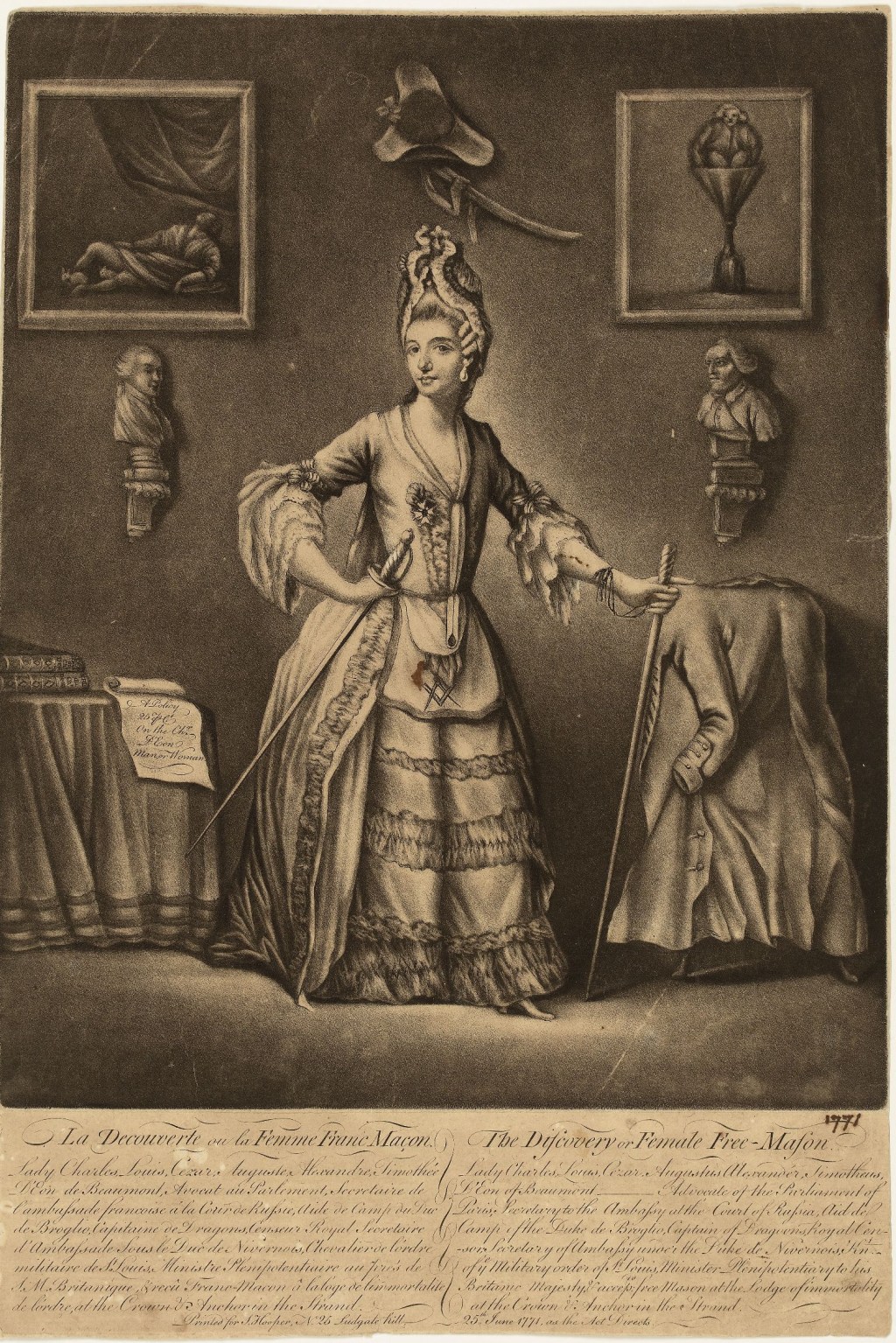
One of the most intriguing engravings of the 18th century shows an elegant lady holding a sword and staff, wearing a cross of the military order of Saint-Louis and, more bizarrely, wearing a Masonic apron. The engraving is entitled ‘La Découverte ou la Femme Franc-Maçon’ – roughly translated as ‘The Discovery of the Female French
 Philippa Lee