How this curious cat became a scientist of her own life!
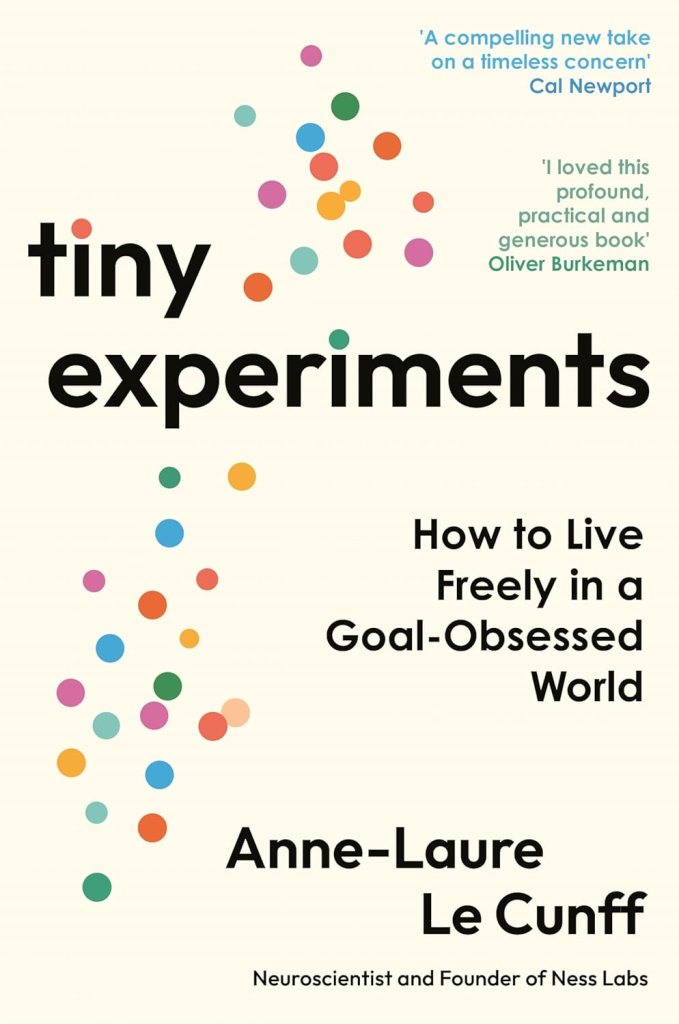
Tiny Experiments is the manual for using your brain to the utmost potential.
Some time in February, I received an email from Ness Labs, a blog I had been following for around eight months. It was an invitation to apply to join “The Curiosity Collective”, an ephemeral online community project where 300 curious minds would be working with Anne-Laure Le Cunff, a neuroscientist, writer and entrepreneur and founder of Ness Labs.
Ness Labs is a community for “curious minds, self-learners, and lifelong explorers who want to understand the intricacies of the human mind”, it offers evidence-based content, coaching, and courses.
Anne-Laure is half-French, half-Algerian, and was born in Paris. She “sold French wine in New York, studied in Tokyo, worked at Google in San Francisco” and is now based in London where she is doing a PhD in Psychology & Neuroscience at King’s College.
The brain, and how it learns has been of huge interest to me and I have always been according to some, too curious for my own good. So, I jumped at the chance to apply for The Curiosity Collective. I was amazed (and delighted) to receive another email a week later to say that I had been accepted and that the project would start in March.
Over four weeks, 300 participants were privy to the wisdom gleaned from Anne-Laure’s extensive research and contained in her first book Tiny Experiments: How to Live Freely in a Goal-Obsessed World, which at that point was pre-publication. We had a weekly live online session with Anne-Laure, hundreds of us crammed onto Zoom – multi-layered screens of faces from around the globe, all eager and curious. It was impossible to meet or greet all members, but there was an energy-charged sense of community and commitment from the get-go.
“Becoming the scientist of your own life starts with observation”
– Anne-Laure Le Cunff
Week 1 – PACT: Become the scientist of your own life
We began by experimenting with observation, studying our behaviour and cognitive scripts. We had to choose a day and act like an anthropologist. Studying ourselves as if we were from a fascinating culture and making field notes without judgment. We noted how we used our time, what gave us energy or what drained us, what we thought or cared about at pivotable points in the day. Using time stamps, noting shifts in our behaviour and patterns was a great way to see where we could make changes, or take different approaches to tasks. What could we do to improve? Maybe add productive new tools to our work/life schedules, making time for creativity, solitude, or pursuing new skills.
Once we had picked a suitable hypothesis to explore, we formulated a pact along these lines: I will [action] for [duration]. We publicly shared our pact for the coming week with the community.
Week 2 – ACT: Putting the PACT into practice
My pact: ‘I will read a physical book for 15 minutes before sleep for five days’. This experiment sounds really basic, but over the past five years, I had lost the art of reading – especially non-fiction – for leisure or pleasure. I couldn’t focus on more than a couple of pages of a physical book. This was due to habituated reading as an editor and researcher. It was also linked to a loss of concentration related to my neurological disorder. I had become addicted to scrolling on my phone before sleep. I was sick of getting sucked into deep dives when I should be winding down. Plus, I desperately wanted to get back to my former ability to devour a good book in one sitting.
Other members of the community chose equally simple tasks. Examples such as ‘I will not access the internet before breakfast for five days’, or ‘I will write 300 words a day for five days’. There was nothing massively ambitious for most of us, but that was the point. We liberated ourselves from the hyped-up world of unachievable money- or fame-oriented goals. Pursuing linear goals at break-neck speeds often comes at the expense of our physical and mental health.
“The key is not to
get to a specific destination, but to learn from the process.”– Anne-Laure Le Cunff
Week 3 – REACT: Reflecting on progress
Anne-Laure explained that “experimentation without analysis is just activity; the real magic happens when trial and error form a growth loop. This is where metacognition – thinking about your own thinking – comes into play”. For our analysis, we used a system of ‘plus’ = what went well, ‘minus’ = what didn’t work so well, and ‘next’ = to continue, tweak, or pivot.
My results: I started reading a biography Leonard Cohen: The Mystical Roots of Genius that I was really excited to dive into. A fascinating exploration of the religious and mystical meanings to his works, it was deeply engrossing and I immediately grabbed my journal and phone, making notes, Googling facts and…big ‘minus’. Two days into my pact I already had to ‘pivot’. I moved on to fiction and chose my battered copy of Serenissima by Erica Jong, and this did the trick. I read the entire book over two nights, and started on another. For me, making a pact, stating it in public on the forum, and learning from the process (rather than just tossing the book and giving up) was the key to achieving what I wanted. It doesn’t sound like a big deal, but to me it was.
Week 4 – Summing up and the end of the experiment
By week four, so many of us on the project were really buoyed up by our collective curiosity experiments and were sad at the prospect of leaving the community. The website auto-deleted soon after our last session. However, we were equally delighted to have been an instrumental part in ‘testing’ Anne-Laure’s work. We had all learnt so much and were empowered by how simple the complex subject of neuroscience could be when it was demonstrated in such a user-friendly way. Tiny Experiments really is a manual for using your brain to the utmost potential.
We had all pre-ordered copies of the book and were eagerly awaiting publication day. The Curiosity Collective is no more but the great news is that through Anne-Laure’s Ness Labs website, you can sign up to receive her inspiring weekly newsletters, and the option to join the Private Community, which offers courses, coaching, and the chance to network with other curious minds.
Stay curious!

Tiny Experiments: How to Live Freely in a Goal-Obsessed World is the antidote to all those hard-nosed, brain-punishing, self-help, create-your-six-figure-business tomes that mainly fuel us with crushing anxiety and unrealistic goals.
Available from all good booksellers worldwide.
*As an Amazon Associate, I may earn from qualifying purchases.
 Philippa Lee
Leave a comment