
We need to talk about hearing loss.
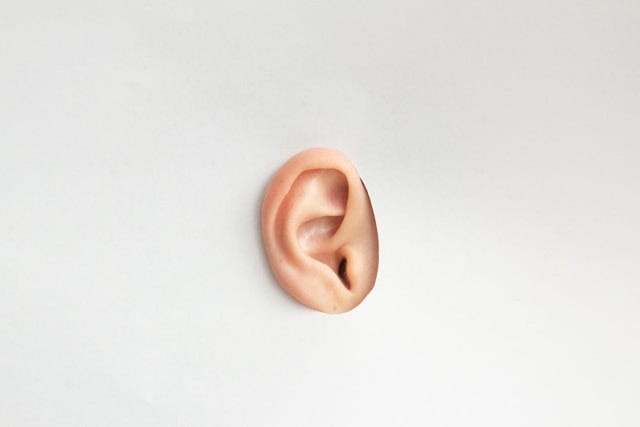
I started losing my hearing in my twenties. I had a bout of tinnitus that I put down to a wild evening at a Motorhead concert that lasted for days, then months. Thirty five years later, I realise that it wasn’t Lemmy’s fault after all; yet here I am now severely hearing impaired.
Here’s some stats:
- There are an estimated 12 MILLION people in the UK with varying degrees of hearing loss/tinnitus or hearing sensitivity (hyperacusis)
- 1.5 BILLION people worldwide are estimated to have some form of hearing loss (nearly 20% of the global population) and 430 million of those have disabling hearing loss/deafness.
- It’s more common than diabetes…or cancer — as of November 2023, about 60.7 million Americans aged 12 and older have hearing loss, which is more common than diabetes or cancer.
- According to the U.S. Department of Veterans Affairs (VA), hearing loss and tinnitus are the top two health concerns for veterans at VA medical centers. In 2020, the VA reported that more than 1.3 million veterans received disability compensation for hearing loss, and more than 2.3 million received compensation for tinnitus. Veterans may experience hearing loss due to exposure to loud noises and ototoxic chemicals, such as jet fuel, during their military service. Veterans who have experienced blast injuries are more likely to have hearing disturbances than those with other injuries. A VA study found that 48% of veterans who had been exposed to blasts had decreased sound tolerance, compared to 33% of service members.

So, we’re not a small group, we are a very large ‘minority’.
Yet there is little sympathy, empathy or compassion for hearing loss — it’s deemed either our fault — loud concerts etc, or the price of ageing. There are so many variables, just as there are types of hearing loss. Three types include sensorineural hearing loss, conductive hearing loss and mixed hearing loss.
With every decibel lost, it is a tiny bereavement

Sensory loss is as great a loss as losing any other physical ability. Imagine not being able to hear your child’s voice, your favourite music, the birds’ morning chorus. Sweet nothings in the darkness become…nothing. Hearing loss distances us enormously from other people, from the ones we love. Social interaction becomes fraught with tension, exhausting and frustrating for all concerned — we pull away, we distance ourselves. The fear of misunderstanding, of being misunderstood is stressful; we are hyper vigilant to our surroundings yet unable to decipher the sounds, and nuances of voices. We rely on physical cues; watching faces intently, micro-focusing in on the lips — we can appear intense, irritated, or worse, downright weird.
Combine the loss of hearing with tinnitus and you have a double whammy of distortion, confusion and exhaustion. You can never have silence. The never-ending, hissing, ringing or pulsing noise cannot be silenced. It is called ‘ringing in the ears’ but it is not in the ears, it is technically ‘ringing/hissing’ in the brain (sound perception in the absence of physical stimuli). If you want to understand this horrible phenomena I strongly suggest watching neuroscientist Josef Rauschecker discussing the science behind tinnitus in this TedX talk:
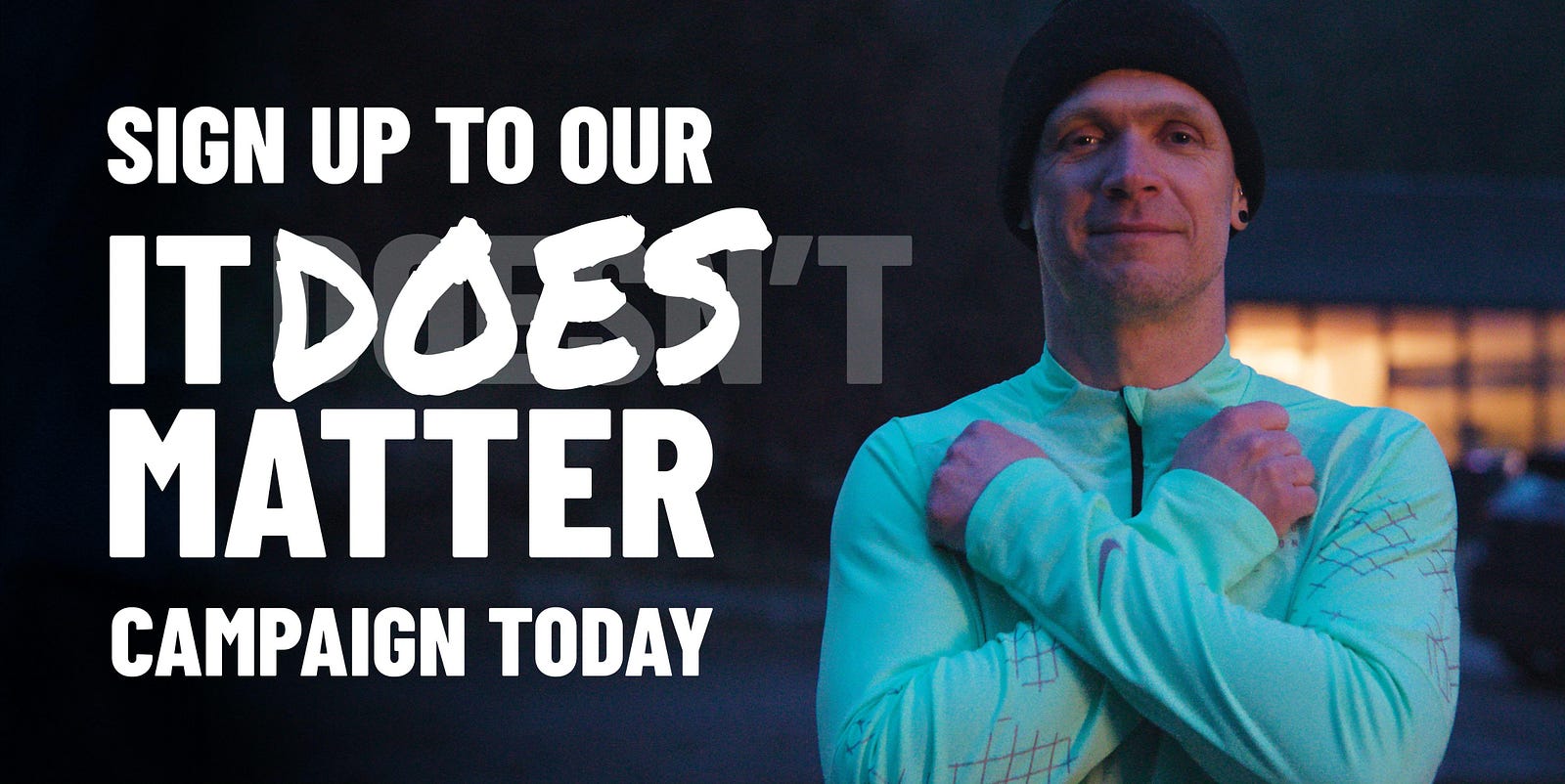
Don’t tell us ‘it doesn’t matter’
The RNID — the major UK charity supporting people who are deaf, have hearing loss, or tinnitus — have recently started a campaign highlighting major new research into the public perceptions and attitudes towards deafness/hearing loss and those who suffer from it. They surveyed 5,383 people who are deaf or have hearing loss and 2,768 of the general public.
“Over the last year, two thirds of deaf people and people with hearing loss have experienced negative attitudes from others. More than a quarter say they are ignored in public by most people, and if they miss the conversation first time, millions are being dismissed and told ‘it doesn’t matter’.
We did this research to understand both public attitudes towards deaf people and people with hearing loss, as well as the lived experiences of our communities. We wanted to learn what assumptions, challenges and misconceptions people face on a day-to-day basis to help us understand what changes we need to see and make in the world. And worryingly, our communities are experiencing poor communications with the general public in most areas of daily life. These experiences build up over time and can have a significant impact.”
It does matter…
People often ignore our condition, or they forget very quickly. They mumble at us and if after a few repetitions we still can’t work out what they are saying, they get irritated and say ‘oh, it doesn’t matter’, often accompanied by a dismissive wave of the hand. It may not matter to them, but it matters to us, it matters not to be dismissed.
We endlessly have to remind people that we can’t hear them, that turning away from us, calling from another room, expecting us to use phones like everyone else, is not only frustrating, it chips away at our self-worth, makes us feel misunderstood and uncared for. More recently, the use of masks has made our lives almost impossible, not only when dealing with the public, or in shops, but at medical appointments, where crucial information given is often misunderstood or not heard.
At the other extreme are those who have probably undergone some form of ‘diversity and inclusion’ training — most likely not involving the input of any hearing impaired or deaf person. They take it upon themselves to be overly inclusive by raising their voice to a level that would probably deafen a hearing person, or alternatively talking to us in a weird sing-songy voice, slowly mouthing words at us as if we are a toddler with learning difficulties. It’s the same voice they utilise for elderly people — to them, we have all clearly lost our marbles and can only respond to baby-talk. I know they mean well but it is infantilising and really not inclusive.
Ignorance, or occasionally a true lack of empathy is to blame for this attitude. There are those who just don’t care and either ignore the fact or dismiss it with an inconsiderate or clearly rude attitude — ‘you don’t look deaf’ said one woman to me at a dinner party. What the f*ck does deaf look like? I’m still trying to work that one out. To be fair, she didn’t ‘look stupid’… until she opened her mouth.
Or, there’s the ‘hilarious’ jokes — those who think it’s really funny to cup their hand round their ear and bellow ‘whaaat?’ when you tell them you have hearing loss/deafness. It was vaguely funny…the first time. Don’t get me wrong, I like a good self-deprecatory joke with the best of them, but I prefer them funny…
Jim went to his audiologist and got the latest, greatest, newest advanced technology hearing aids. The audiologist set up a follow up appointment for two weeks. Two weeks later Jim came back and the audiologist asked, “How do you like the new hearing aids?” Jim responded, “They are fantastic, light years ahead of my last pair. I can hear every word, even in noisy situations!” The audiologist said, “I’ll bet your family is happy too.” Jim said, “I haven’t told them yet, but I’ve changed my will 3 times.”
Ba-dum-tssssss! (or ‘Boom Boom!’ if you’re a Brit and remember Basil Brush…)
Can you sign?
I also regularly get asked if I sign (use BSL/ASL). I don’t, because:
a) no one else in my social sphere does or can, and
b) I’m not profoundly deaf.
I usually respond by saying, ‘no, do you?’ Of course, 9 times out of 10 they don’t, so I can never quite understand why they think it would be useful if I did.
While I’m on the subject, that’s another thing — there is a big difference between being mildly/moderately/severely hearing impaired and completely deaf. Just as people often think that if a person says they are blind, they cannot see anything at all. People do not get this. A lot of public perception its that we must go from hearing-to-not-hearing in one fail swoop — there’s no in-between in their minds — hearing/deaf, that’s it. I had one doctor say to me ‘you don’t seem very deaf’. I did point out that the miraculous little gadgets in my ears (my hearing aids) are quite good these days.
Ah, hearing aids — the clue is in the name — hearing + aids. They ‘aid’ our hearing, they do not magically make it better. They work with what hearing we have left — whether that is low frequency or high frequency, or somewhere in between.

Although I’m beginning to detest the term ‘spectrum’ — hearing loss, like blindness, and other mobility-related disabilities, is indeed on a spectrum.
And so, we resort to labels:
- ‘hearing impaired’ (some people object to that because of the implication we are deficient in something)
- ‘hearing loss’ (many profoundly Deaf people object to that because they never had hearing to lose in the first place)
- ‘deaf’ (instigated by the Deaf community, a lowercase ‘d’ is used to signify we are not profoundly Deaf)
- ‘Deaf’ (used by the Deaf community to signify they are profoundly Deaf)
Are you keeping up?
Don’t worry if not, I’m still trying to navigate the political correctness of my own condition after 30+ years of it, and it only adds to the frustration and fatigue.
I do understand it’s frustrating for others, it’s bloody frustrating for me and I live with it 24/7! But I am convinced, hearing loss/deafness is at the bottom of the disability heap for inclusion and accessibility — hopefully the RNID campaign will make hearing people understand that #itdoesmatter to us.
If you’d like to know how to better communicate with us — please sign up here — we’d love to matter to you…
 Philippa Lee
Leave a comment